Get in your inbox the latest News and Offers from

- University of Abuja, FCT
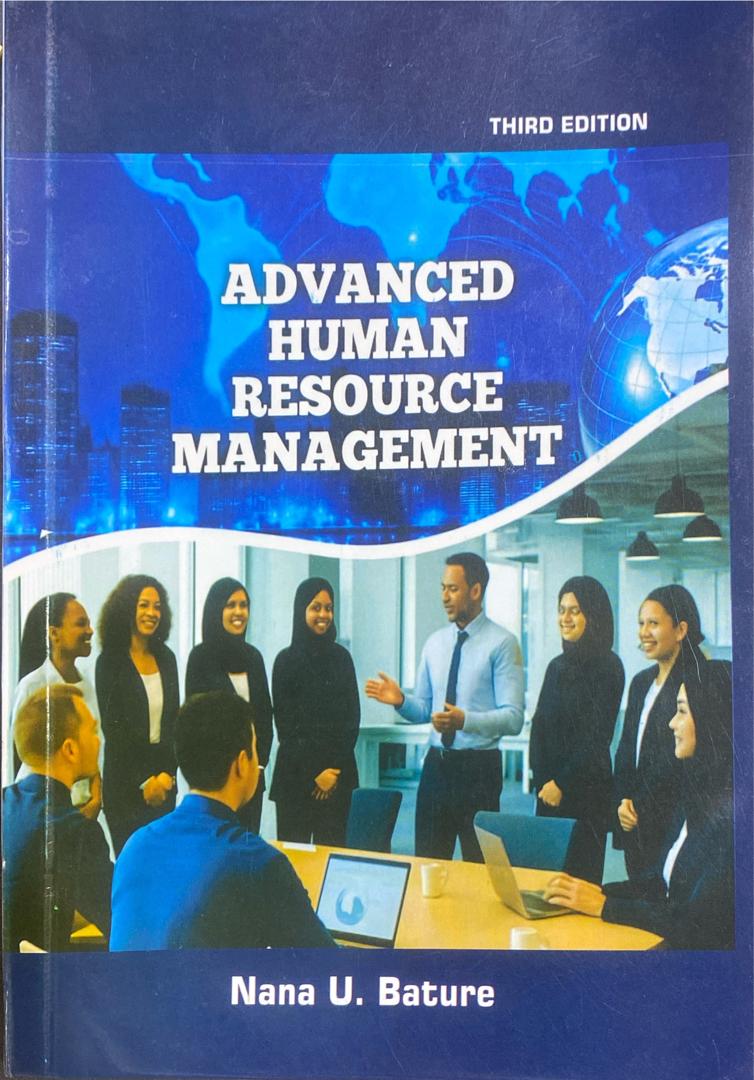
ADVANCED HUMAN RESOURCE MANAGEMENT
Verified
ISBN: 978-978-083-7983
Language: English
Academic Textbook & Publication
ADVANCED HUMAN RESOURCE MANAGEMENT
By Prof. Nana Usman Bature
Price
NGN 12,000.00
Secure Checkout
Flutterwave & Bank
Nationwide Delivery
About "ADVANCED HUMAN RESOURCE MANAGEMENT"
Comprehensive overview and core themes
The environment today is dynamic, so is also Human Resource Management. An organization's competitive advantage is often found in its most valuable resource – its people. That is why the most successful companies today invest in ways to motivate, train, develop, compensate and challenge their employees.
Managing people is a complex task in organizations, community or in a nation as a whole. The book seeks to address such complexity in its treatment of the concepts, principles, theories and practice of Human Resource Management in organizations.
The aim of this book, therefore, is to bring various works done on human resource management to your door step, prepare managers for the global challenges and to make the readers more effective and efficient in their dealings with matters personal as well as managers of organizations.
This book will be of benefit to students in colleges, Polytechnics, Universities globally, who will one day work in organizations, managers who strive to become more effective and other professionals who want to understand the organization in which they work. This book is indeed for people in all kinds of organizations, large or small, private or public enterprise, such as governments, healthcare providers, educational institutions and soon.
Chapter 1 of this book covers the Nature and Scope of Human Resource Management, Chapter 2 examines Human Resource Planning, Chapter 3 deals with Human Resource policies PREFACE Advanced Human Resource Management xxAdvanced Human Resource Management in Organization, Chapter 4 covers Employment Process, Chapter 5 examines Staffing Functions and Chapter 6 deals with Performance Appraisal. Chapter 7 covers Performance Management, Chapter 8 deals with Compensation and Reward Management, Chapter 9 examines Career Management and Succession Planning, Chapter 10 deals with Talent Management, Chapter 11 examines Change Management and Chapter 12 covers Human Resource Training and Development.
Chapter 13 examines Green Human Resource Management, Chapter 14 treats Leadership in Organization, Chapters 15 Treats Motivation Chapter 16 and 17 examine Electronic Human Resource Management (e-HRM) and Human Resource Analytics Respectively, Chapter 18 examines Strategic Human Resource Management, Chapter 19 deals with Human Resource Management (HRM) and Artificial Intelligence (AI), Chapter 20 deals with Grievance in the Workplace, while Chapter 21 examines the Diversity and Advanced Conflict Management.
Chapters 22, 23 and 24 focus on Staff Strike; Alternative Dispute Resolution (ADR); and Industrial Relations Management. The book concludes with Chapter 25 which Discusses Time Management.
The book, as it has tried to cover so much ground in the field of Human Resource Management will do with more useful suggestions from the public that may arise in the course of their readings for incorporation in future review.
Book Introduction & Preface
Foreword and introductory remarks
Every organization needs resources such as Human Resource, money, material, machinery and technology to function effectively and efficiently. Availability of other resources without human beings cannot fulfill the objectives of the organization. One of the most important resources in all organizations is human resource; that is, people involved in the production and distribution of goods and services. Human resource refers to all members of an organization, ranging from top managers to lower employees. Human beings in effect constitute the greatest assets in all organizations. They are the wealth of the organization and the nation as a whole.
Publication Specifications
Key facts, author credentials, and ordering info
Book Title
ADVANCED HUMAN RESOURCE MANAGEMENT
Author
Prof. Nana Usman Bature
ISBN / Reference
978-978-083-7983
Price
NGN 12,000.00
Language
English
Payment Gateways
Flutterwave, Card, USSD, Bank Transfer
READY TO ORDER?
Get Your Copy of "ADVANCED HUMAN RESOURCE MANAGEMENT" Today
Fast processing, safe payments, and prompt nationwide delivery.